Hot Mess, Blessed: Why Falling Apart Is Having Its Main Character Moment

Photo by Photo by Beaver Fernandez on Unsplash on Unsplash
Somewhere between the death of the clean girl aesthetic and the rise of the 'delulu' era, a new archetype quietly took over the internet — and honestly, your group chat. She's running late. Her tote bag has a mysterious stain. She has three unfinished iced coffees on her desk and a situationship she's definitely not over. She posted about all of it. It got 80,000 likes.
She is the Messy Girl. And right now, she is everything.
The Perfect Implosion of Perfectionism
To understand why chaos became a flex, you have to understand what it's reacting against. For the better part of a decade, aspirational aesthetics ruled digital culture. The clean girl — glass skin, slicked bun, green juice, color-coded planner — set the standard. The 'that girl' era told us that with enough 5 a.m. wake-ups and journaling consistency, we could optimize our way to a perfect life.
It was exhausting. And it was, for most people, completely unattainable.
The performance of having-it-together required constant upkeep — the right products, the right routines, the right apartment that photographed well enough to look like a set. And as the economic reality for millennials and Gen Z in the U.S. got increasingly grim (rent is how much?), the gap between the aesthetic and the actual started feeling less like aspiration and more like mockery.
So the pendulum swung — hard. If perfection is fake, then imperfection must be real. If polish is a lie, then mess must be the truth. And truth, in the current cultural moment, is the most valuable currency there is.
What Chaotic Energy Actually Looks Like in 2025
The messy girl era isn't just a vibe — it's a full aesthetic system with its own visual language, wardrobe codes, and social rituals.
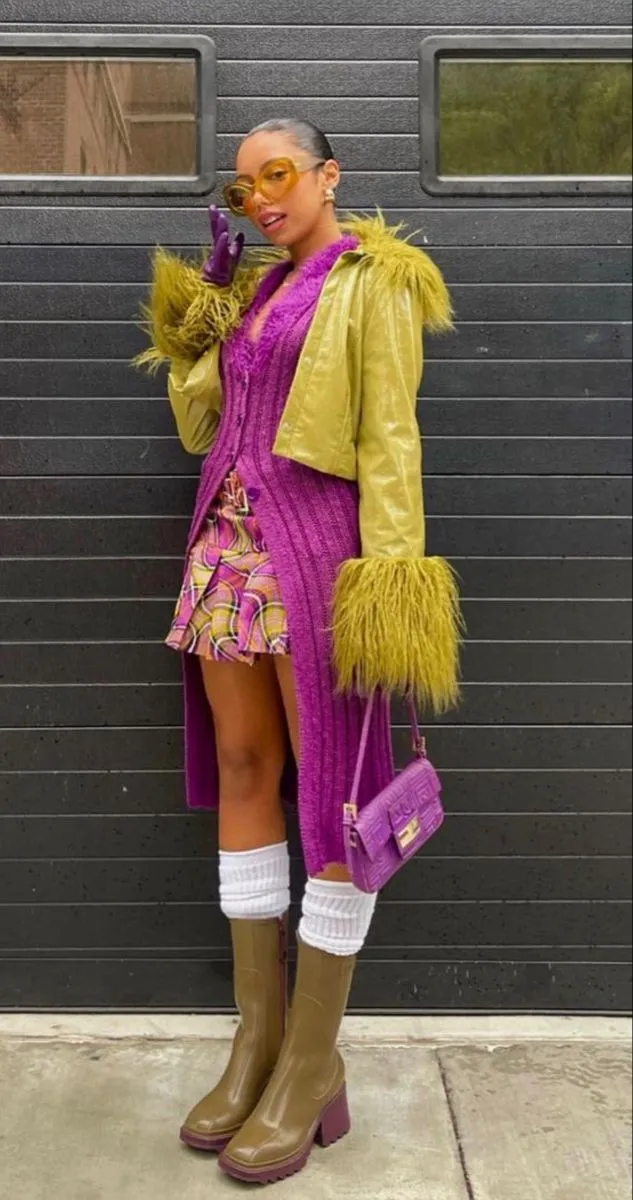
Fashion-wise, it shows up in the deliberate embrace of 'undone.' The blazer thrown over a wrinkled vintage tee. The skirt with the hem that's slightly unraveling — kept that way, on purpose. Mismatched earrings not as an accident but as a statement. The 'I got dressed in the dark' energy that actually takes a surprising amount of curation to pull off convincingly. Brands like Urban Outfitters and Free People have been quick to codify this into shoppable chaos, selling 'effortless' looks at prices that are anything but.
On social media, it's the 'failing upward' confession video — the one where a creator details a spectacular professional or personal disaster with the energy of someone recounting a hilarious story at a dinner party. It's the apartment tour that lingers lovingly on the pile of clothes on the chair. It's the dating app bio that leads with 'I will definitely forget your birthday but I'll make it up to you in other ways.'
In career spaces, it's the LinkedIn post — increasingly common, deeply chaotic — where someone announces that they quit their corporate job with no plan, or shares that they got fired and are 'weirdly at peace with it.' These posts go viral with a regularity that suggests they're hitting something real in the collective professional psyche.
The Relatability Industrial Complex
Here's where TrendGuiders has to put on its critical lens for a second, because this is where things get interesting.
The messy girl era is, at its core, a relatability play. And relatability — as we've explored before on this site — is one of the most calculated moves in the current cultural playbook. The irony of the chaos aesthetic is that it requires just as much curation as the clean girl look it supposedly overthrew. The 'messy bun' that took forty-five minutes. The 'candid' mirror selfie that went through twelve takes. The 'unfiltered' rant that was actually drafted in the Notes app first.
There's nothing inherently wrong with this — all aesthetic choices involve curation. But it's worth naming when a trend that positions itself as anti-performance is, in fact, a highly refined performance. The messy girl isn't not trying. She's trying to look like she's not trying. That's a distinction with real meaning.
It also raises questions about who gets to be 'charmingly chaotic' versus who just gets read as incompetent. The messy girl aesthetic, in its most celebrated form, tends to center white, thin, conventionally attractive women whose dysfunction is coded as quirky and endearing. For women of color, for people in lower-income brackets, for anyone whose 'mess' doesn't come packaged in the right body or the right social context, visible chaos can have very different professional and social consequences. The trend doesn't always acknowledge that gap.
Liberation or Just a Rebrand?
Let's steelman the messy girl era for a moment, because there is something genuinely valuable happening here.
The cultural rejection of toxic perfectionism is long overdue. The pressure that younger generations — particularly women — have been under to perform seamless, effortless excellence across every domain of life simultaneously is legitimately damaging. If the messy girl era creates permission to be publicly imperfect, to fail without shame, to show up as a full human rather than a highlight reel, that's genuinely liberating.
There's also something politically interesting about the embrace of chaos in a moment of systemic instability. When the systems that were supposed to deliver stability — stable jobs, affordable housing, a predictable future — have largely failed younger generations, refusing to perform stability you don't actually have starts to feel like a reasonable response. The mess isn't a personality quirk. For a lot of people, it's just an honest description of conditions.
But liberation and trend are not the same thing. And when chaos gets packaged into a shoppable aesthetic, when 'I'm a mess' becomes a brand identity that gets you more followers, it starts to function less like freedom and more like a new set of rules. You're still performing. You've just changed the costume.
The Move Forward
Maybe the real flex — the genuinely countercultural one — isn't performing chaos or performing perfection. It's opting out of the performance altogether, which is, admittedly, much harder to monetize and much less Instagrammable.
But if the messy girl era has done anything useful, it's cracked open a conversation about what we actually owe each other in terms of self-presentation. The answer, increasingly, feels like: less than we thought.
Your life doesn't have to be aesthetically coherent to be worth living. Your mess doesn't need a filter. And your realness doesn't require an audience to count.
Now if you'll excuse us, we have three unread emails and a coffee that's been reheated twice. We're doing great.