Sad Is the New Slay: How Emotional Pain Became a Personality Brand
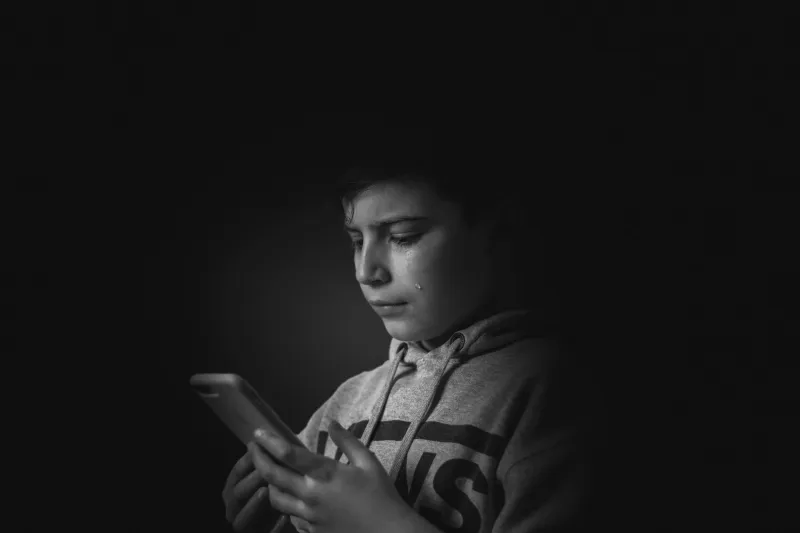
There's a particular kind of TikTok video that hits different at 2 a.m. A young woman, eyeliner slightly smudged, stares into the camera with a vacant, beautiful melancholy. The audio is something mournful — maybe Phoebe Bridgers, maybe a slowed-down Lana Del Rey cut. The caption reads something like 'not okay but make it cute.' It has 4.2 million views.
Welcome to the grief economy — where sadness isn't just something you feel, it's something you brand.
When Vulnerability Went Viral
Let's be clear about one thing upfront: mental health struggles among millennials and Gen Z are completely, devastatingly real. Rates of anxiety and depression in the U.S. have climbed steadily over the past decade, accelerated by a pandemic, economic instability, and the particular psychic weight of doomscrolling through a world that seems perpetually on fire. Nobody is arguing that the pain isn't genuine.
But something interesting — and worth interrogating — has happened alongside that pain. Platforms like TikTok and Instagram didn't just create space for people to share their struggles. They created incentive structures around those struggles. Vulnerability gets engagement. Emotional rawness drives shares. And in the attention economy, anything that drives engagement eventually gets optimized, packaged, and sold back to you.
The result is a cultural moment where depression, anxiety, and emotional exhaustion have become, for some, less of a private experience and more of a public identity marker. A vibe. An aesthetic. A brand.
The Sad Girl Industrial Complex
The 'sad girl' aesthetic didn't appear out of nowhere — it has roots in the early Tumblr era, when grainy black-and-white photography and poetry about emptiness defined a whole corner of the internet. But what was once a niche subculture has gone fully mainstream, turbocharged by algorithmic amplification and influencer culture.
Today, it shows up everywhere. In the 'depression meal' trend, where people proudly post plates of plain crackers and cheese as a badge of emotional depletion. In the cottage-core-adjacent 'sad academia' aesthetic, where melancholy is styled through oversized sweaters and dog-eared copies of Sylvia Plath. In the endless parade of 'anxiety check' videos where creators list their symptoms with the same casual energy they'd use to discuss their skincare routine.
Brands noticed. Fast. Marketing teams started speaking the language of emotional fragility — 'healing era' merch, 'therapy is cool' slogans on sweatshirts, self-care products positioned not around luxury but around survival. Mental health became, in the most literal sense, a market category.
And here's where it gets complicated.
The Authenticity Tax
There's a version of this story that's actually pretty hopeful. Destigmatizing mental health conversations is genuinely important work. For generations, people — especially men, especially people of color — were told to bury their struggles. If TikTok is creating space for people to say 'I'm not okay' without shame, that's meaningful progress.
But there's a shadow side that we'd be doing you a disservice to ignore.
When emotional pain becomes an aesthetic, it creates a weird pressure loop. People who are genuinely suffering may feel compelled to perform their suffering in ways that are legible and relatable to an online audience — to package their worst moments in the right filter, the right audio, the right caption. Meanwhile, people who aren't struggling might adopt the visual language of mental distress because it reads as deep, interesting, and emotionally evolved. The posturing and the genuine article start to look identical.
This has real consequences. When 'anxious' becomes a personality trait you claim rather than a condition you experience, it muddies the waters for people seeking actual support. It can trivialize clinical experiences. And it creates communities built not around healing, but around identifying with pain — which, mental health professionals will tell you, is a very different thing.
Dr. Julie Smith, a UK-based psychologist whose work has circulated widely in U.S. wellness spaces, has pointed out that there's a meaningful difference between processing emotions and ruminating in them. The grief economy, at its worst, rewards the latter.
Monetized Melancholy
Let's talk money, because the grief economy is — surprise — actually an economy.
The global mental health app market is projected to exceed $17 billion by 2030. Wellness brands have pivoted hard into emotional health language. Influencers with 'mental health creator' in their bios command serious brand deals. And the content itself? Sad-adjacent content consistently outperforms on engagement metrics, which means the algorithm actively surfaces and rewards it.
This creates a perverse incentive: getting better might actually be bad for your content strategy. Recovery narratives exist, sure — but the dramatic arc of ongoing struggle tends to keep audiences more hooked than the quieter story of someone who did the work and now mostly feels okay on Tuesdays.
That's not a critique of individual creators, many of whom are sharing genuinely and helpfully. It's a systemic observation about what the platforms are built to reward.
So Where Does That Leave Us?
Here's the thing about trends: they tell us something true, even when they're distorted. The grief economy exists because there is genuine grief. Young Americans are carrying real weight — student debt, climate anxiety, housing insecurity, a post-pandemic sense of collective exhaustion that hasn't fully lifted. The impulse to reach for community around that pain makes complete sense.
The question isn't whether the pain is real. It's whether aestheticizing it actually helps, or whether it just makes it prettier to look at.
The most radical thing, maybe, isn't the crying selfie. It's the boring, unglamorous, non-content-able work of actually getting better — the therapy sessions that don't make good TikToks, the medication adjustments, the slow rebuilding of routines. That stuff doesn't trend. But it's the stuff that actually moves the needle.
Sadness deserves more than a filter. And you deserve more than a brand.