Go Deep or Go Home: Why Your Obscure Obsession Is Now Your Biggest Social Asset

Remember when you used to hide the weird stuff? The binder full of train schedules you memorized for fun, the spreadsheet tracking every colorway of a discontinued sneaker line, the forum you moderated for a video game that came out before most of your followers were born. You kept that stuff tucked away — a private universe you didn't dare bring to the surface because nobody was going to get it, and "nobody gets it" used to feel like a warning.
Now? It's basically a flex.
Something shifted, quietly and then all at once. The cultural premium on being broadly relatable — knowing a little about everything, coasting on mainstream references, never going too far down any one rabbit hole — has cratered. In its place, a new status game has emerged, and the rules are almost the opposite of what they used to be. The deeper your knowledge, the more specific your passion, the more aggressively niche your entire deal, the more cultural capital you carry. Being really into something weird isn't a liability anymore. It's practically a personality résumé.
The Death of the Generalist Cool Kid
For a long time — especially in the social media era's early years — the aspirational online persona was the person who seemed effortlessly plugged into everything. They knew the meme before you did. They watched the show everyone was about to watch. They had a take on every cultural moment, and it was always slightly ahead of the curve. Breadth was the game.
But here's the problem with breadth: it doesn't build community. It builds an audience. And Gen Z, more than any generation before it, has figured out the difference.
An audience watches you. A community finds itself in you. And the only way to create that kind of recognition — that electric "oh my god, you too?" moment — is to go so specific that the people who relate to it feel like they've found something rare. Which, increasingly, they have.
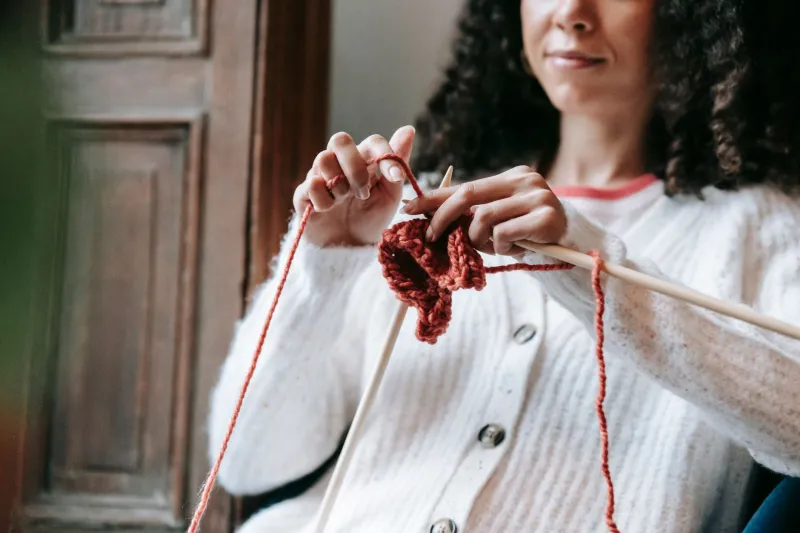
When someone's entire online presence is built around, say, the architecture of mid-century American diners, or the oral history of regional roller derby leagues, or hand-dyeing yarn using plants foraged from their backyard — that specificity doesn't alienate people. It magnetizes the exact right ones.
Niche as Identity Infrastructure
What's actually happening here goes beyond aesthetics or algorithm behavior. It's about how people are building identity in a fragmented cultural landscape where there's no longer a shared mainstream to orient yourself around.
When everyone was watching the same three TV channels and buying clothes from the same mall anchors, being a generalist made sense — it was just called being normal. But now, with infinite content, micro-communities, and a fashion ecosystem that spawns and buries entire aesthetics in the span of a few months, "normal" doesn't really exist anymore as a stable reference point. There's no center to orbit.
So people are building their own centers. And those centers are specific.
Your niche isn't just what you like — it's how you signal your values, your community, your intellectual depth. Knowing the complete discography of a niche post-punk band from Omaha that broke up in 2003 isn't just a fun fact. It's a worldview. It says something about how you move through culture: deliberately, curiously, without needing anyone else's permission to care about something.
That kind of conviction reads as authenticity. And right now, authenticity is the most valuable thing you can project.
The Algorithm Actually Helped (For Once)
Here's an irony worth sitting with: the same recommendation engines that get blamed for homogenizing culture have also done something unexpected. They've made it easier than ever to find your people when your people are scattered across the country — or the world.
A kid in rural Kansas who's obsessed with competitive axe-throwing history doesn't need to find a local scene. They need TikTok's For You page to connect them with the three other people who share that exact fixation, and then a Discord server to turn that connection into something ongoing. The infrastructure for niche community-building has never been more accessible, which means there's less friction between "I'm weirdly into this" and "I found my whole entire tribe."
This accessibility has also raised the stakes on depth. When you can find someone who shares your interest pretty easily, what differentiates you within that micro-community is how far you've actually gone. Casual fans are everywhere now. The people who get real status are the ones who can go further, know more, have been there longer.
The New Gatekeeping (And Why It's Different This Time)
Let's be real: there's a gatekeeping element to all of this, and it's worth naming. Niche culture has always had its gatekeepers — the people who quiz you on your credentials before accepting you into the fold. That's not new.
What's different is who the gatekeeping serves. Historically, niche gatekeeping was often exclusionary in ways that mapped onto broader social hierarchies — who got to be a "real" fan, who got to claim a subculture, whose knowledge was treated as legitimate. A lot of that was ugly, and a lot of it still is.
But the current wave of niche identity culture has a different flavor in many corners. The depth being celebrated isn't just trivia accumulation — it's lived experience, emotional investment, community contribution. The people getting cultural credit aren't just the ones who can recite facts. They're the ones who built something, organized something, kept something alive when nobody was paying attention.
That's a more interesting version of gatekeeping. It's not "you don't belong here" — it's "how much do you actually care?"
What This Means for Mainstream Culture
The ripple effects are already visible. Brands are scrambling to understand micro-communities they can't just buy their way into. Marketing that used to work by reaching everyone now barely reaches anyone, because the audiences that matter have retreated into specificity. The most culturally resonant moments of the last few years haven't come from mass campaigns — they've come from niche communities that suddenly went supernova when the mainstream caught up to them.
For the trend-conscious, this is actually useful information. The stuff that's going to matter next isn't being incubated in broad daylight. It's in the forums, the subreddits, the group chats, the Discord servers where a hundred people are incredibly passionate about something that hasn't gotten a think piece yet.
The future is always niche first.
Owning Your Weird, Fully
If there's a takeaway here, it's not that you need to manufacture a niche for clout. That never works — people can smell performed passion from a mile away, and the communities built around genuine obsession have finely tuned detectors for it.
The takeaway is that the thing you've been quietly, almost embarrassedly into? The thing you've been hedging when you describe it to people — "it's kind of niche, you probably don't know it" — you don't have to hedge anymore. The cultural moment has finally caught up to the idea that going deep is more interesting than going broad.
Your obscure obsession isn't something to apologize for. It's the most interesting thing about you. Lead with it.