Tiny Tribes, Massive Power: Why the Most Influential Communities You've Never Heard Of Are Running the Culture Now
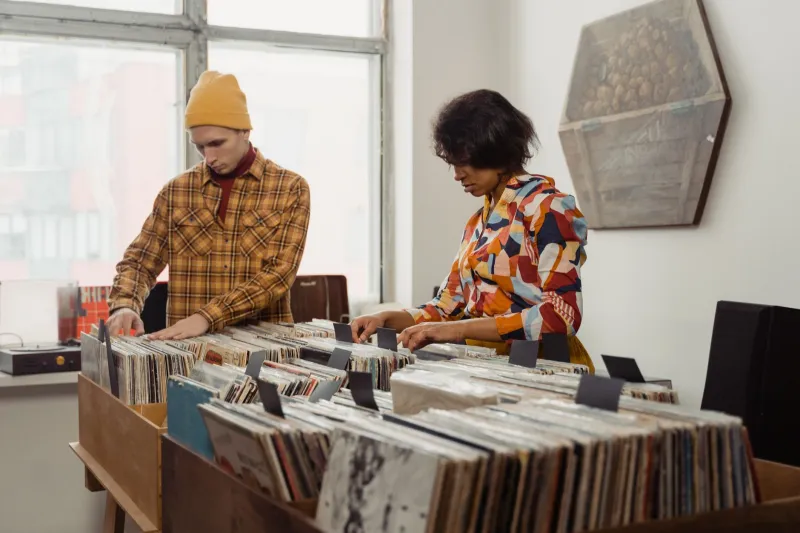
There's a corner of the internet where people argue passionately — and we mean passionately — about the correct way to lace a vintage Nike Cortez. Another pocket where fans of a specific 1990s shonen anime sub-genre have built entire visual languages, fashion codes, and community rituals that the mainstream has absolutely zero context for. And yet? Both of these micro-worlds are quietly shaping what ends up on mood boards, in brand campaigns, and eventually on the racks at Target.
Welcome to the era of the niche — where small is not just beautiful, it's genuinely powerful.
The Death of the Monoculture (And Why Nobody's Really Mourning It)
For most of the twentieth century, American culture operated on a broadcast model. A handful of TV networks, a few major record labels, and a small cluster of fashion magazines decided what was cool, and the rest of us consumed accordingly. Shared cultural touchstones were practically mandatory — you either watched the Super Bowl halftime show or you were socially irrelevant.
That model didn't just crack. It basically dissolved.
The internet didn't just give people more choices — it gave them the infrastructure to find each other. Suddenly, the one kid in rural Ohio who was obsessed with Scandinavian black metal could locate thousands of others who shared that exact obsession, build relationships with them, develop shared aesthetics, and create content that resonated deeply within that world. No gatekeepers required. No mainstream validation needed.
What we ended up with is a culture that looks less like a single river and more like a delta — thousands of streams moving in different directions, each one feeding something specific and alive.
Passion Density Beats Audience Size Every Single Time
Here's the thing that brands took way too long to figure out: a community of 8,000 people who are completely obsessed with something is worth more than a passive audience of 800,000 who kind of sort of care. The term that keeps circulating in marketing circles is "passion density" — the concentration of genuine enthusiasm within a group — and it turns out that metric matters enormously.
When someone is deep in a niche, they don't just consume content about it. They evangelize. They spend money on it. They recruit others. They create their own content that further expands the community's reach. The engagement rates inside tight micro-communities routinely demolish what mainstream influencers pull. A creator with 12,000 devoted followers in the competitive kettlebell training space will often outperform a generic fitness influencer with ten times the following when it comes to actual product movement.
Brands like New Balance, Carhartt, and Stanley didn't accidentally stumble into cultural relevance with younger audiences. They were discovered — and then championed — by hyper-specific communities first. Workwear heads. Vintage runners. Outdoor utility nerds. Those niche groups carried the signal outward until it hit critical mass. The mainstream didn't create the trend; it just eventually showed up late to the party.
From Gatekeeping to World-Building
One of the more fascinating cultural shifts inside these micro-communities is the move away from the classic internet gatekeeping posture — that defensive "you're not a real fan" energy — toward something that looks a lot more like active world-building.
The communities that are genuinely thriving right now aren't the ones hoarding their interests like precious secrets. They're the ones constructing elaborate shared universes around their passions: developing inside language, creating visual identity systems, producing educational content that onboards newcomers with care. Think of the way the "BookTok" community transformed literary culture, or how the natural wine world built an entire aesthetic and social identity that pulled in people who'd never previously cared about fermentation.
This shift is significant. It means niche communities are no longer just interest groups — they're functioning micro-cultures with their own fashion codes, value systems, and hierarchies of taste. And because they're built on genuine shared enthusiasm rather than algorithmic aggregation, they tend to be remarkably cohesive and resilient.
When Your Subculture Becomes Someone Else's Mainstream
Here's where it gets philosophically interesting. As these micro-communities grow in influence and visibility, something inevitable happens: the mainstream notices. Brands come calling. Larger creators start borrowing the aesthetic. The thing that felt intimate and specific starts appearing in places that feel very, very far from where it started.
For longtime community members, this moment is almost always complicated. There's pride — your thing got recognized. And there's grief — your thing got taken. The hyperpop fans who watched their sonic world get absorbed into commercial pop production. The dark academia crowd who saw their carefully constructed visual identity become a fast fashion collection at Urban Outfitters. The "gorpcore" outdoor enthusiasts who blinked and found Arc'teryx jackets on fashion week runways.
But what's worth noticing is that the communities themselves rarely disappear when this happens. They evolve. They go deeper, get more specific, find the next layer of the thing they love. The mainstream borrows the surface; the community keeps the substance. And the cycle begins again.
Creators Who Get It Are Winning Differently
The creators who are building real, lasting cultural equity right now aren't chasing broad appeal. They're going narrow on purpose — picking a lane so specific that it feels almost absurd, and then serving that lane with genuine depth and consistency.
A ceramicist who makes content exclusively about wood-fired anagama kiln techniques. A fashion creator who only covers pre-1985 American workwear. A food creator whose entire world is regional Mexican cuisine from Oaxaca. These people aren't trying to be everything to everyone. They're trying to be irreplaceable to someone.
And what they're building in the process — the trust, the community loyalty, the cultural authority within their specific world — is something that no algorithm change can easily disrupt. Because it's not built on reach. It's built on resonance.
The Takeaway for Anyone Paying Attention
If there's a single thing that the rise of micro-communities is teaching us about culture right now, it's this: specificity is not a limitation. It's a strategy.
The instinct to sand down your edges, broaden your appeal, and chase the biggest possible audience is deeply ingrained — in creators, in brands, in media companies. But the evidence keeps pointing the other way. The communities with the most actual influence, the most devoted members, and the most lasting cultural footprint are the ones that committed fully to something particular.
Mass culture isn't gone. But it's no longer the only game in town — and increasingly, it's not even the most interesting one. The action is in the niches. It always was, honestly. We're just finally paying attention.
So whatever weird, specific, deeply personal corner of culture you've been hesitant to fully inhabit? Go deeper. Your people are already there, waiting.