Gone Without Warning: The Grief Nobody Validates When Your Favorite Creator Vanishes

Photo: Cynthia Magana cynthmag, CC0, via Wikimedia Commons
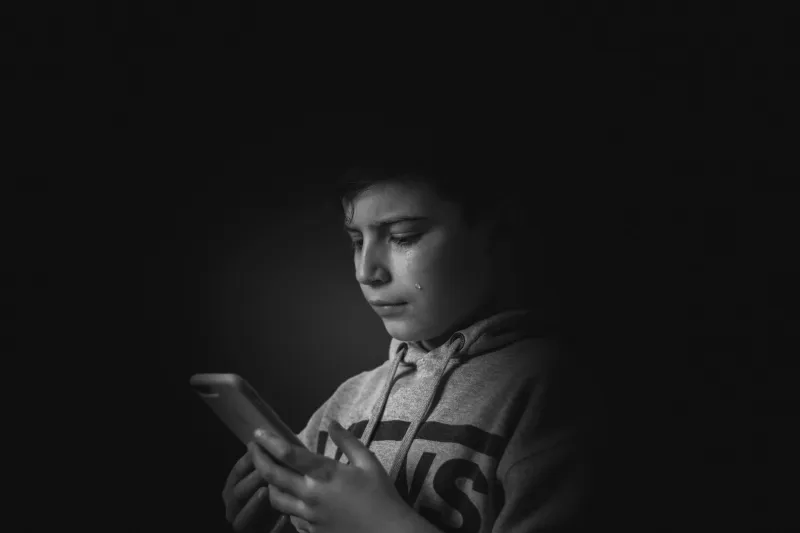
Let's say you spent three years watching someone. Not in a weird way — in the way that millions of people do now, as a completely normalized part of daily life. You watched them make coffee in their Brooklyn apartment at 7 a.m. You knew the name of their cat, their complicated relationship with their mom, their anxiety spirals, their glow-ups. You felt genuinely proud of them when things went well. You worried when they went quiet.
And then one day, they were gone. Account deleted. Or worse — still there, but completely different. The person you knew replaced by a stranger with the same face and handle, posting content that feels like it was made for someone else entirely.
You're not heartbroken, you tell yourself. That would be embarrassing. They didn't even know you existed.
But here's the thing: you kind of are. And that's not pathetic — it's the entirely predictable emotional output of a relationship structure the internet built without ever asking whether we had the psychological infrastructure to handle it.
The Relationship That Only Goes One Way (Until It Doesn't Feel That Way Anymore)
The term "parasocial relationship" was coined in 1956 by sociologists Donald Horton and Richard Wohl to describe the one-sided emotional bonds audiences form with media figures. They were mostly writing about television personalities, but they understood something fundamental: the human brain doesn't naturally distinguish between a person it sees regularly and a person it actually knows. Familiarity triggers attachment, full stop.
What Horton and Wohl couldn't have anticipated was an internet that would take that dynamic and turbocharge it. The creators Gen Z grew up watching weren't distant TV personalities — they were people who answered DMs (sometimes), who did Q&As, who cried on camera, who shared mental health journeys in real time. The parasocial relationship of 2024 is textured in ways the 1956 version simply wasn't. There's a feedback loop now. Likes, comments, replies — they create an illusion of reciprocity that makes the bond feel genuinely mutual.
So when it breaks? It breaks like a real thing.
The Different Flavors of Creator Loss
Not all parasocial grief looks the same, and it's worth naming the different versions because they hit differently.
There's the sudden disappearance — the creator who posts one day and then never again, no explanation. This is the ambiguous loss version, the one with no closure. Your brain keeps waiting for a notification that never comes.
Then there's the cancellation spiral, which is its own specific trauma. The person you admired is revealed to have done something harmful, and suddenly you're grieving twice: the loss of the relationship and the retroactive reframing of everything it meant. Fans of creators who've been cancelled describe something that sounds a lot like finding out a close friend has been lying to you for years. The memories don't just disappear — they get contaminated.
And arguably the most underrated form of this loss is the content pivot. The creator is still there, still posting, still racking up views — but they've fundamentally changed what they make. The beauty creator who goes corporate. The raw, vulnerable journaler who suddenly posts only brand deals. The gaming channel that becomes a podcast about crypto. The version of them you connected with is gone, replaced by something optimized for a different audience. You didn't get a breakup. You got a slow fade.
Why Gen Z Feels This More Acutely
It would be easy — and wrong — to dismiss this as a generational sensitivity issue. The reality is more structural than that. Gen Z came of age during a period of profound social fragmentation: school shootings, a pandemic, political instability, and a loneliness epidemic that predated all of it. Traditional community structures — church, neighborhood, extended family — have been steadily eroding for decades. The internet didn't create the need for belonging; it just stepped into the vacuum.
For a lot of young people, especially those who grew up in isolated environments, LGBTQ+ youth who couldn't be out at home, kids in rural areas, anyone who felt like they didn't fit — online creators weren't just entertainment. They were proof that people like them existed. They were community.
When that goes away, you're not just losing a content source. You're losing a place where you felt understood.
The Grief Without a Name
What makes this particular kind of loss so hard to process is that society hasn't built rituals around it yet. When someone dies, there are funerals, condolences, casseroles on the doorstep. When a friendship ends, there's at least a shared cultural script for heartbreak. But when your favorite creator goes dark?
You close the app. You maybe tweet something vague. You feel faintly ridiculous about the whole thing and don't mention it to anyone.
There's a concept in psychology called "disenfranchised grief" — mourning that society doesn't recognize as legitimate, and therefore doesn't support. The loss of a pet used to fall into this category. So did miscarriage, and the death of an ex. Parasocial loss is the newest entry on that list, and it's affecting millions of people who have no language for what they're feeling and no permission to feel it.
Creator communities on Reddit and Discord are quietly building their own rituals — memorial threads, tribute posts, collaborative archives of content before an account went dark. It's improvised grieving, but it's real grieving.
What Comes Next
As the creator economy matures, this is going to become an increasingly urgent conversation. Platforms profit enormously from the emotional bonds between creators and audiences — and they bear essentially zero responsibility for what happens when those bonds break.
There's also a growing responsibility on creators themselves to think about the relational weight they carry. That's not to say every creator owes their audience an explanation for every life choice — they absolutely don't. But the most thoughtful ones are beginning to acknowledge that the intimacy they've built has real stakes on both sides.
For the rest of us: the grief is valid. The relationship was real, even if it was asymmetrical. And you're allowed to miss someone who never knew your name.