Blink and It's Cringe: How the Trend Machine Turned Identity Into a Countdown Clock
There's a specific kind of dread that lives in the comments section. You post something you genuinely love — a fit, a phrase, a reference — and somewhere between the upload and the first dozen views, the replies come in: "this is so two weeks ago" or, worse, "okay, the girlies have found it." Translation: it's over. You missed it. You're already late to your own personality.
Welcome to the Micro-Trend Industrial Complex — a system so efficient at producing and discarding cultural moments that it's started eating the people who feed it.
When Trends Stopped Being Trends
For most of human history, cultural trends moved at a pace that felt almost geological. The aesthetic of a decade actually lasted a decade. Slang had a lifespan. Subcultures had time to develop mythology, inside jokes, gatekeeping rituals, and genuine community bonds before the mainstream ever caught wind of them. Punk. Grunge. Emo. Even early internet culture — think Tumblr's heyday — had a slow-burn quality that let people actually settle in to an identity.
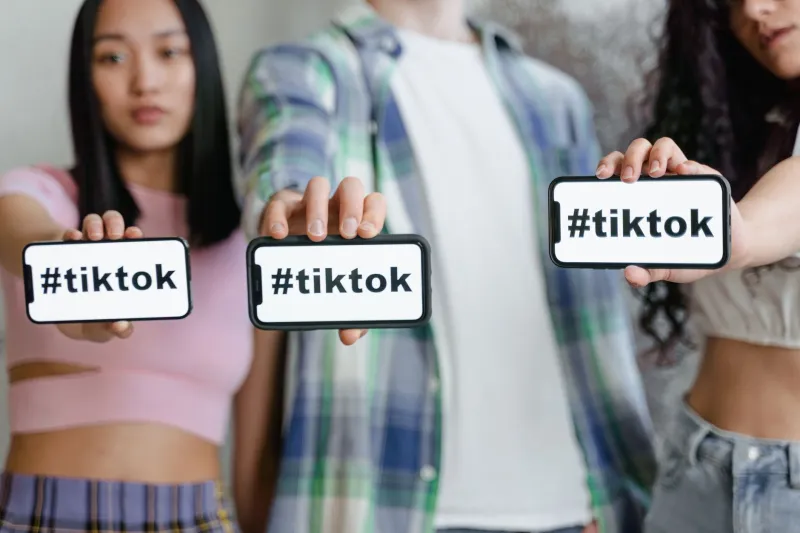
Then TikTok happened. And more specifically, the TikTok algorithm happened.
The platform didn't just accelerate trend cycles. It mechanized them. The For You Page operates like a giant cultural refinery — constantly processing raw material (a sound, a silhouette, a phrase, a niche interest) into viral content, flooding the zone until everyone's seen it, and then immediately signaling that saturation equals death. The moment something hits mass visibility, the early adopters are already pivoting. The machine needs fresh input. Always.
What we're left with is a trend cycle that now operates on a timeline closer to a news cycle than a cultural one.
The Aesthetic Graveyard Is Getting Crowded
Remember cottagecore? Dark academia? Goblincore? Coastal grandmother? Clean girl? Tomato girl summer? Each of these aesthetics arrived with genuine energy — real people building real Pinterest boards and real wardrobes around a coherent visual identity. And each of them was declared dead before most people had finished building that wardrobe.
The pattern is almost algorithmic in itself: a niche community develops something authentic, TikTok's discovery engine surfaces it, bigger creators adopt it, brands catch on, fast fashion produces a $14.99 version of it, and then the original community — watching their thing get flattened and mass-produced — abandons it entirely. The whole cycle can run its course in under two months.
What's insidious about this isn't just the speed. It's the shame architecture built into it. Platforms have trained us to associate recency with legitimacy. Being early to a trend reads as having taste. Being late reads as being out of touch. Being on a trend at peak saturation somehow reads as the worst of all — basic, unoriginal, a follower rather than a leader.
So everyone is perpetually anxious. Even the people who started the trend.
Identity on a Timer
For millennials, this is disorienting but mostly just exhausting. For Gen Z — a generation that came of age entirely inside this system — the consequences run deeper. When cultural identity moves this fast, it becomes genuinely difficult to figure out who you actually are versus who the algorithm rewarded you for being last week.
There's real psychological weight to that. Developmental psychology has always held that identity formation requires some degree of stability — trying on a self, sitting with it, testing it against the world. That process takes time. But the Micro-Trend Industrial Complex doesn't do time. It does now and next, with nothing in between.
The result is a generation that's remarkably fluent in aesthetics but sometimes unsure what any of it means to them personally. When your entire visual identity can be dismantled by a comment suggesting it's "giving 2023," it's hard to build anything that feels truly yours.
And the platforms know this. The anxiety of being behind is, functionally, the engine that keeps everyone scrolling. Stay on the app long enough and you'll catch the next thing before it peaks. Maybe. Probably not. But maybe.
The Brands Are Winning This One
If you're looking for who actually benefits from trend velocity this extreme, follow the money. Fast fashion brands like Shein and Zara have built their entire operational model around the TikTok cycle — producing micro-trend-specific pieces at a volume and speed that would have been unthinkable ten years ago. By the time a garment gets to your door, the aesthetic it represents might already be on its way out, but the purchase has been made. The algorithm already moved on. Your closet didn't.
Brands in every category — beauty, home goods, tech accessories — have learned to exploit the same loop. Seed a product with the right creators at the right moment, ride the algorithm's amplification, and collect the sales before the backlash cycle kicks in. It's a remarkably clean extraction model, and the raw material being extracted is your attention, your identity anxiety, and your wallet.
The "authentic" micro-communities that originally generate these trends rarely see much of the economic upside. The aesthetic gets strip-mined, the community gets diluted, and the brand takes the profit margin.
Opting Out Isn't as Easy as It Sounds
The obvious response to all of this is: just stop caring. Log off. Wear what you want. Be who you are regardless of where the trend cycle is at. And genuinely — that's solid advice. But it's also advice that's easier to give than to take when you live in a social environment where cultural fluency functions as actual social currency.
For a lot of young people, especially in cities, in college environments, in creative industries, being current isn't just vanity. It's a networking tool. A belonging signal. A way of demonstrating that you're plugged in, that you're paying attention, that you're worth paying attention to. Opting out entirely can have real social costs that are hard to dismiss.
What's emerging instead is something more nuanced: a growing contingent of Gen Z and younger millennials who are consciously slowing their own engagement with trend culture without abandoning it entirely. Thrifting instead of chasing fast fashion drops. Building personal style around pieces with longevity rather than moment-specific aesthetics. Letting trends pass without feeling obligated to participate. Treating cultural movements as things to observe rather than things to immediately perform.
It's not a revolution. But it might be the most realistic form of resistance available.
The Trend That Might Actually Last
Here's the thing the Micro-Trend Industrial Complex doesn't want you to internalize: the most interesting people in any cultural moment have always been the ones who couldn't be easily categorized. The ones whose taste felt personal and specific rather than algorithmically optimized. The ones who were clearly aware of trends without being defined by them.
That's a harder thing to be in an environment designed to reward immediate participation and punish hesitation. But it's also the thing that actually ages well — in your wardrobe, in your creative output, and in the way you carry yourself.
The countdown clock is real. The anxiety it generates is real. But the idea that you're only valuable when you're ahead of the cycle? That one's manufactured. And you don't have to buy it.