All the Stuff They Left Behind: Navigating the Wreckage of a Friendship That's Over
Breakups come with a script. There are rules — who gets the apartment, who keeps the friends, who cries first at the Spotify playlist you made together in 2021. Romantic endings are culturally rehearsed. We have movies for them, therapists who specialize in them, entire Reddit threads dedicated to the logistics of splitting a life in two.
Friendship endings? Not so much.
And yet, for a generation that documents everything — every inside joke reduced to a saved TikTok, every trip immortalized in a shared Google Photos album, every dumb 2 a.m. conversation archived in a thread that still sits unread at the top of your iMessage — the dissolution of a close friendship leaves behind a lot of stuff. Physical. Digital. Emotional. The kind of wreckage nobody gives you a checklist for.
So what do we actually do with all of it?
The Digital Haunting Is Real
Let's start with the obvious: your phone is basically a museum of people you no longer talk to. That collaborative Spotify playlist you built together over three years — the one with 200+ songs that still somehow perfectly matches your mood on a Tuesday commute — doesn't disappear just because the friendship did. Neither does the group chat you haven't muted but also haven't opened since things went sideways. Or their Instagram Stories, which the algorithm keeps serving up like a passive-aggressive reminder that they went to Coachella without you.
For Gen Z especially, friendship is so deeply embedded in digital infrastructure that ending one feels less like closing a door and more like trying to quietly exit a building where your name is still on the lease. You can unfollow, sure. You can archive the texts. But the digital footprint of a significant friendship is enormous, and scrubbing it feels both petty and genuinely impossible.
There's even a term floating around certain corners of Tumblr and Reddit: digital grief. The specific ache of scrolling past content from someone who used to be central to your life. It hits different when it's a friend, because there's no culturally agreed-upon mourning period. No one's asking if you're okay. No one's bringing you a casserole.
The Playlist Problem
Here's a very specific thing that happens: you build a playlist with someone. Maybe it started as a road trip thing, or a "songs that describe us" thing, or just a running joke about a band you both got weirdly obsessed with. Over time, it becomes a document. A living archive of who you both were during a particular stretch of your lives.
And then the friendship ends, and the playlist just... sits there.
Some people delete it immediately, a clean-break move that feels brutal but surgical. Others keep it on private, listening occasionally when they feel nostalgic and self-destructive. A surprising number of people — based on conversations happening openly on Twitter/X and in Reddit's r/friendship — report just leaving it exactly as it was, neither deleting nor actively revisiting, like a box in the back of a closet you're not ready to open.
The playlist becomes a metaphor for the whole inventory problem. You can't really own it anymore, but you can't fully let it go either.
The Physical Stuff Is Weirder
At least digital artifacts are invisible. The hoodie is not.
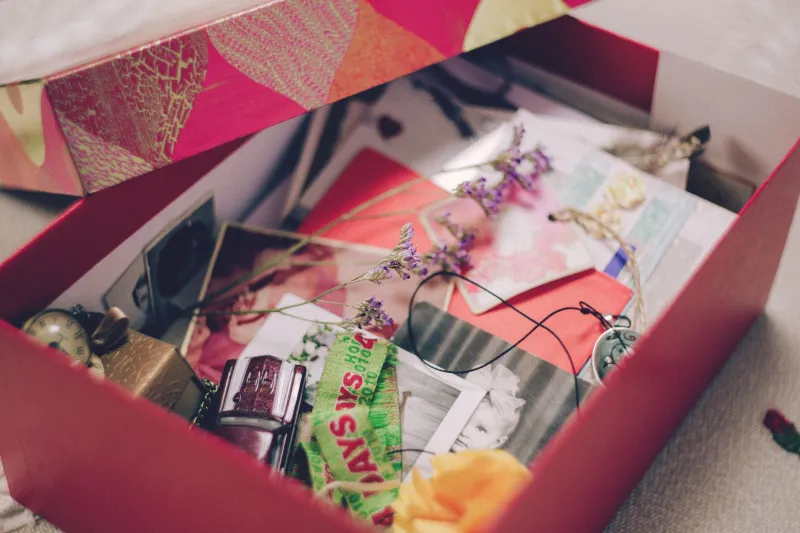
Friendships accumulate physical objects in ways we rarely think about until the relationship ends. The book they lent you that you never returned. The piece of art you bought together at a street market in Brooklyn. The matching jewelry from a trip to Mexico that felt like the best summer of your life and now sits in a drawer because wearing it feels like a lie.
Unlike romantic breakups, there's rarely a formal exchange of belongings. Nobody's texting their ex-best friend to schedule a time to swap stuff back. So it all just stays. And every object carries this weird dual energy — it's evidence that the friendship was real and good, and also evidence that it's gone.
Millennials and Gen Z are increasingly talking about this openly, particularly in spaces like BeReal communities, close-friends Instagram Stories, and friendship-focused newsletters. There's a growing cultural acknowledgment that the stuff of a friendship is a legitimate thing to grieve — not just the person, but the whole ecosystem they occupied in your life.
Inside Jokes Without a Recipient
Possibly the strangest artifact of all: the inside joke with nowhere to go.
Inside jokes are a form of shared language. They're proof that two people built something private and specific together. When the friendship ends, you're left holding vocabulary that only ever had one audience. You'll see something that would have sent a particular person absolutely feral with laughter, and there's just... nobody to text.
This specific loss is something people are only recently starting to articulate out loud. It's not just missing the person — it's mourning the version of yourself that existed inside that dynamic. The self who was funnier, or weirder, or more comfortable, because that particular friendship gave you permission to be.
The Inventory Question Nobody Asks
So here's where we land: when a significant friendship ends, most of us are left managing an inventory we never asked to curate. Playlists, photos, objects, jokes, entire personality traits that only made sense in the context of that relationship.
The cultural conversation around this is still pretty nascent. We're getting better at naming friendship grief as a real thing — therapy TikTok has helped, honestly — but we haven't quite caught up on the practical, almost logistical side of what you do with everything they left behind.
Some people are creating their own rituals. A digital cleanse where they archive rather than delete, acknowledging the history without keeping it front and center. Others are leaning into the artifacts, treating them as documentation of a chapter that mattered even if it's closed. There's no consensus because there's no script.
What there is, increasingly, is permission to take it seriously. To acknowledge that a friendship ending is a real loss, and the pile of stuff left behind is evidence of something that was genuinely worth having — even if it's over.
You don't have to throw out the playlist. You also don't have to keep it. But you do get to decide, on your own timeline, what the inventory means now that the story has changed.